Search the way people decide
Resort, dates and guests on the home page, plus collections by bed count — 2–4, 5–6, 7–9, 10+.
Case study
A family-run company with 130+ luxury homes across nine gated resorts near Walt Disney World. Karen, Yvonne and Amalia run the business; the platforms were taking the guest relationship.
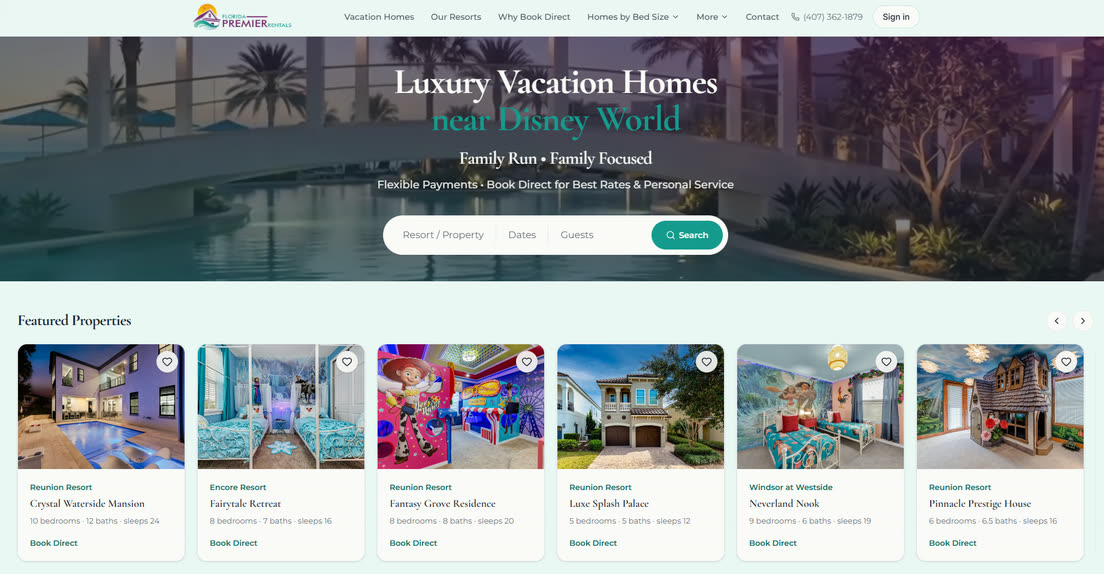
A guest looking for an eight-bedroom home with a private pool in Reunion Resort is not searching for a company name — they are searching for the house. The OTAs were winning that search, then charging commission to introduce a customer who already wanted exactly what Florida Premier has. The company had the best homes on the market and no way to be found directly.
On top of that, a hard catalogue: 130+ homes, nine resorts, themed bedrooms, capacities from 8 to 24 guests, and flexible payment terms no platform knows how to explain.
Resort, dates and guests on the home page, plus collections by bed count — 2–4, 5–6, 7–9, 10+.
Reunion, Encore, ChampionsGate, Storey Lake, Windsor Hills and four more — with the amenities that make people choose one over another.
Full gallery, capacity, baths, date-based pricing, and the book-direct argument next to the price — where the decision happens.
Phone, SMS and WhatsApp (US and UK), because a family spending five thousand dollars wants to talk to a person before they pay.

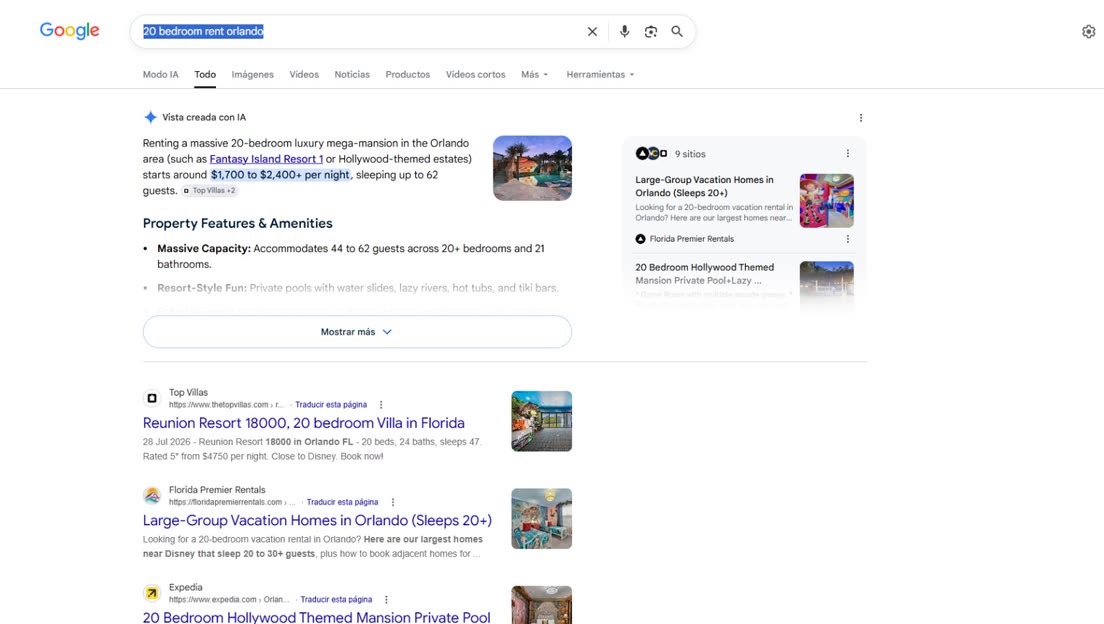
The screenshot is the real Google result. Florida Premier sits above Expedia for that search, and Google cites it as a source in its AI-generated overview — the place more and more people read the answer before clicking anything at all.
Google’s own audit of the site. A booking site that loads fast and is clean underneath is the same site that ranks — and the agentic-browsing pass means AI agents can read and act on the pages, which is where a growing share of bookings will start.

Three homes or two hundred — the approach is the same, the size is not.